Novo Nordisk and the foundation that controls Europe's obesity-drug giant
The maker of Ozempic and Wegovy reported 2025 sales of about DKK 309 billion. Behind it sits an unusual owner, the Novo Nordisk Foundation, which controls most of the votes. How that structure shaped a long scientific bet, and what it means now competition has arrived.
Key takeaways
- Novo Nordisk's 2025 sales were about DKK 309 billion, up 10% at constant exchange rates, with obesity care sales up 31%.
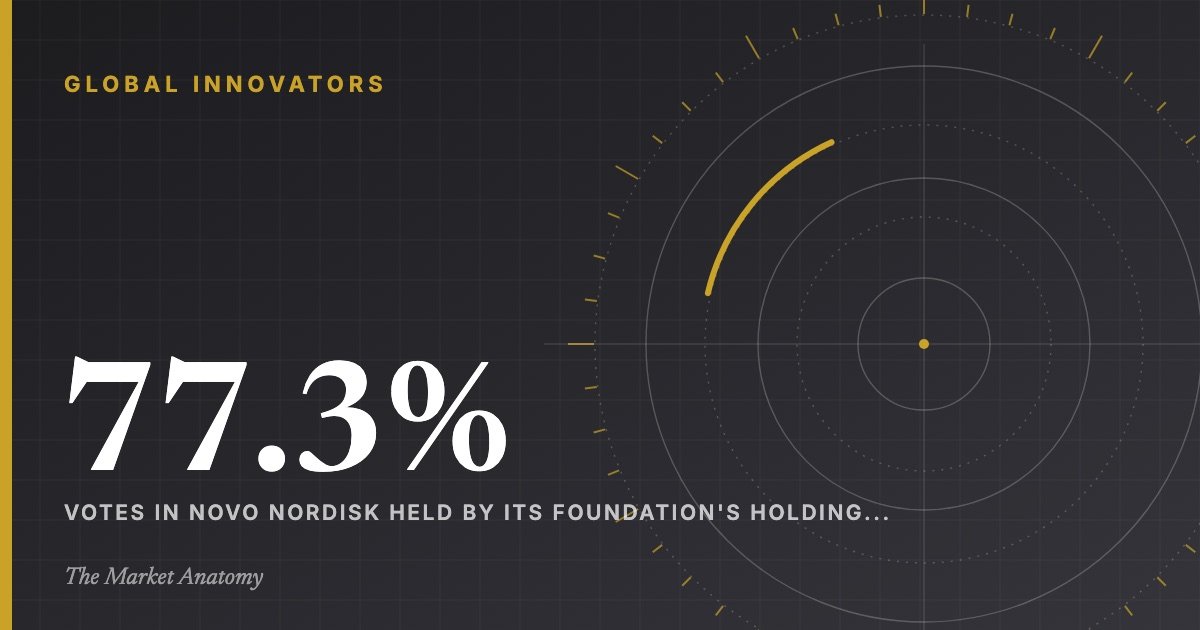
- The Novo Nordisk Foundation, through Novo Holdings, holds 77.3% of the votes and 28.1% of the shares, which protects the company from takeover and short-term pressure.
- That stability helped Novo stay with diabetes and metabolic research for decades, the work that led to semaglutide, sold as Ozempic and Wegovy.
- Control by a foundation does not remove competition. Rival drugs, pricing pressure and slower growth have tested the company since 2024.
Bagsværd, a suburb north of Copenhagen, is home to one of the most valuable companies Europe has produced. Novo Nordisk makes semaglutide, the drug sold as Ozempic for type 2 diabetes and as Wegovy for weight management. Demand for these medicines turned a long-established insulin maker into a company the whole world talks about.
Novo's 2025 annual report puts sales at about DKK 309 billion, up 6.4% as reported and 10% at constant exchange rates. Sales of its obesity care medicines grew 31% at constant exchange rates. Those are strong numbers, but they also show slower growth than the extraordinary years before, as competition arrived.
What makes Novo an unusual company to study is not only its products. It is who controls it.
An owner with no owners
Novo Nordisk has two classes of shares. The A shares, which carry more voting power, are not listed. They are held by Novo Holdings, a Danish company wholly owned by the Novo Nordisk Foundation. According to the company's own investor pages and the foundation, Novo Holdings holds 77.3% of the votes and 28.1% of the share capital in Novo Nordisk.
The foundation itself has no owners. It is a self-governing institution whose purpose, set out in its statutes, combines supporting scientific and humanitarian work with providing a stable base for the companies it controls. It is one of the largest charitable foundations in the world, funded largely by dividends from Novo Nordisk and returns from Novo Holdings' investments.
This structure, common in Denmark, means Novo Nordisk cannot be taken over without the foundation's agreement, and its long-term direction is set by an owner that is not looking to sell.
How the structure shaped the science
Drug development is slow and risky. A new medicine can take more than a decade from early research to approval, and most candidates fail. Companies under pressure from shareholders for quarterly results can find it hard to keep funding long programmes with uncertain outcomes.
Novo had spent most of a century in diabetes care, going back to the insulin businesses that later merged to form the company. Its research into GLP-1, a gut hormone that affects blood sugar and appetite, built on that history. The company's first GLP-1 drug, liraglutide, was followed by semaglutide, approved for type 2 diabetes as Ozempic and then, in June 2021, by the US Food and Drug Administration for chronic weight management as Wegovy.
It is not possible to prove that foundation ownership caused this success. But a controlling owner focused on the long term, and on the company's survival rather than its sale price, gave management room to keep investing in one therapeutic area for decades. When the science paid off, Novo was ready.
When the market changes
A stable owner does not stop competition. Eli Lilly's tirzepatide, sold as Mounjaro and Zepbound, has competed directly with Novo's medicines, and reporting through 2025 described Novo losing share in important markets. Pricing pressure in the US, supply constraints in earlier years and the arrival of compounded versions of its drugs also weighed on growth.
Novo's 2025 results reflect that. Growth was still positive, and the company expanded its reach, saying its obesity medicines served about 3.6 million people worldwide. But the share price had fallen well below its peak, and the company went through leadership and cost changes during the year.
Here the foundation's role is tested in a different way. A controlling owner can protect a company from short-term pressure, but it also carries responsibility when strategy needs to change. Reports during 2025 described the foundation taking a more active hand in board decisions, which is what its structure allows it to do.
What founders can take from it
Foundation ownership is rare outside northern Europe, and few founders will set one up. But Novo's story raises two questions for any company with a long-horizon product.
First, does your ownership structure match the time your product needs? A company developing technology that takes ten years to mature needs owners who can wait. Founders choosing investors should ask how long each one is prepared to stay.
Second, who protects the company's purpose after the founders are gone? Foundations, trusts and dual-class shares are all ways of answering that question. Each has costs, but leaving it unanswered also has a cost.
The verdict
Novo Nordisk's success with GLP-1 medicines came from decades of scientific work, and the people who did that work deserve the credit. The foundation that controls the company gave them a rare thing: an owner willing to wait. The years since 2024 show that patience is not enough on its own once rivals arrive, but without it, the drugs that made Novo famous might never have reached the market.
Sources and filings
Every figure in this story comes from the documents below. If you spot an error, write to corrections@themarketanatomy.com.
This article is for information and education. It is not investment, legal or financial advice, and The Market Anatomy has no financial relationship with the companies named. See our editorial policy and disclaimer.